
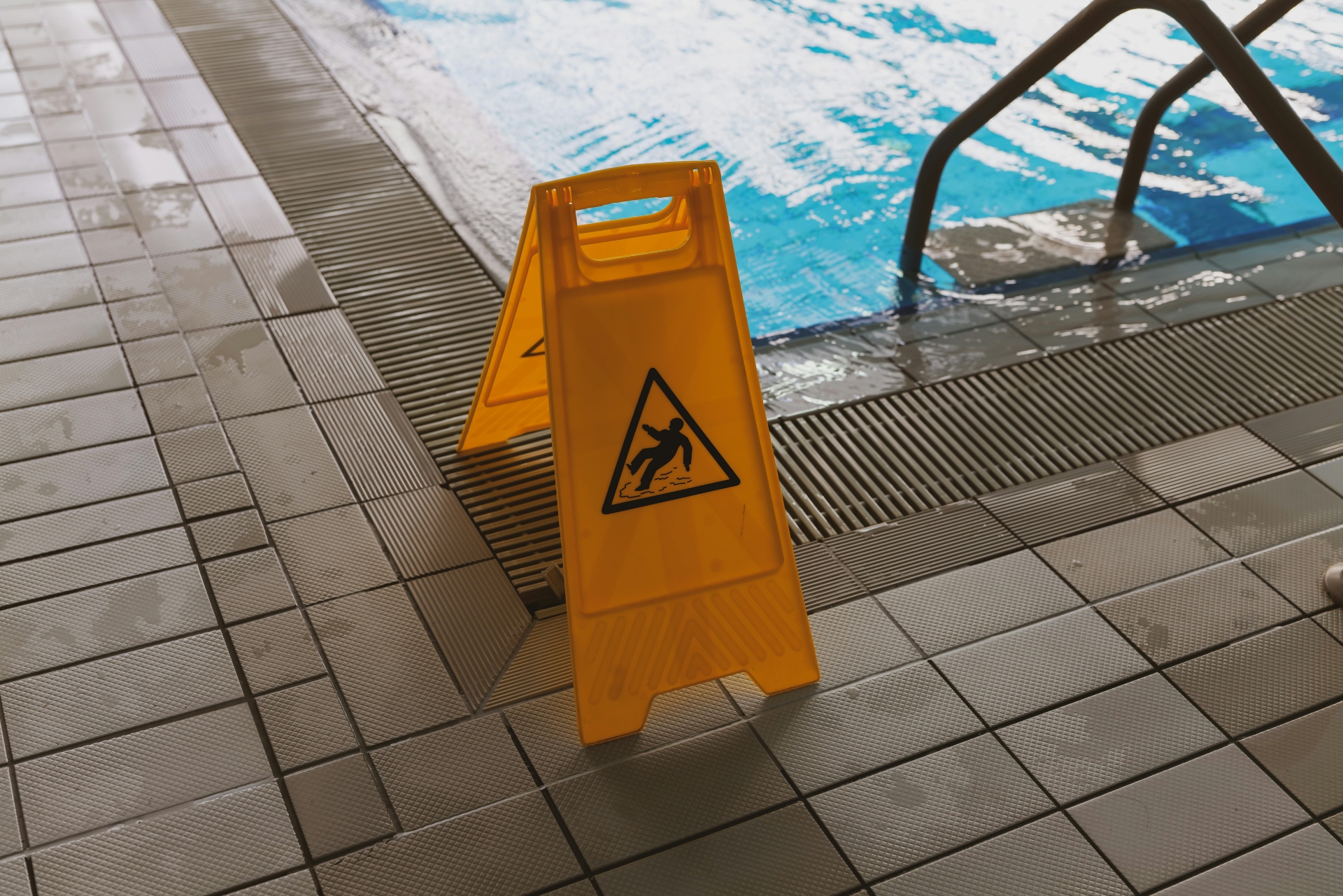
Every summer, emergency rooms in Pennsylvania see a spike in injuries related to swimming pools, and many of them are preventable. Slip and fall accidents remain one of the top causes of pool-related injury claims, especially among children and older adults. If you own a pool or manage a facility in Cranberry Township or Butler County, understanding your legal responsibilities can help you protect your guests and yourself from serious consequences.
According to the CDC, over 1 million Americans suffer slip and fall injuries annually, and wet, slick surfaces are a leading cause[1]. Around pools, common materials like untreated wood, tile, or worn concrete can become dangerous. Instead, opt for:
Legal Tip: Adding non-slip mats near ladders, diving boards, and entry points shows you’ve taken proactive steps to reduce hazards.
Spilled drinks, puddles, and algae build-up are more than just annoying, they’re lawsuit triggers. The National Floor Safety Institute estimates that slips and falls account for over 8 million hospital emergency room visits every year, representing the leading cause of ER visits[2].
Regularly clean your pool deck, and use squeegees or floor dryers to eliminate standing water. Consider absorbent mats near doorways or entrances to catch dripping water from wet feet.
Signage won’t just help prevent accidents, it can also support your legal defense if an injury occurs. Recommended signs include:
Even on private property, clear signs signal that you’ve made reasonable efforts to warn about known risks, which can be crucial in premises liability cases.
Poor lighting is often cited in premises liability lawsuits following nighttime accidents. Ensure that all paths, steps, and pool edges are well-lit, especially for evening use. Motion-sensor lights and low-voltage lighting can improve visibility while keeping energy costs low.
Children are especially prone to poolside slips and trips. According to the CDC, drowning is the leading cause of unintentional injury-related death among children ages 1 to 4[3], and unsupervised play increases the risk of both drowning and fall injuries.
Lock pool gates when not in use, and consider alarms or covers to limit access.
Broken handrails, loose tiles, and cracked decking are common causes of serious injuries, and potential lawsuits. Regularly inspect your pool area and promptly address any maintenance concerns.
Pro Tip: Take dated photos before and after repairs to document your efforts if a claim is ever filed.
In Pennsylvania, property owners have a duty of care to maintain a safe environment for lawful visitors. If someone is injured due to an unaddressed hazard, you may be held liable for:
If the property owner is found negligent, meaning they knew or should have known about a dangerous condition and failed to address it, the injured party may have a strong personal injury claim under Pennsylvania premises liability law[4].
At Benjamin Levine Law, we represent injury victims throughout Cranberry Township, Butler County, and across Western Pennsylvania. Whether you were hurt at a private backyard pool, hotel, or public swimming facility, our firm can help you understand your legal options and fight for the compensation you deserve.
📍 Based in Cranberry Township
📞 Schedule a free consultation today
Sources
[1] Centers for Disease Control and Prevention (CDC). “Falls Are Serious and Costly.” https://www.cdc.gov/falls/facts.html
[2] National Floor Safety Institute. “Slip and Fall Statistics.” https://nfsi.org/nfsi-research/quick-facts/
[3] CDC. “Drowning Prevention.” https://www.cdc.gov/drowning/facts/index.html
[4] Pennsylvania Premises Liability Law Overview. https://www.law.cornell.edu/wex/premises_liability